
How to Keep NRI Kids Connected to Indian Languages and Culture
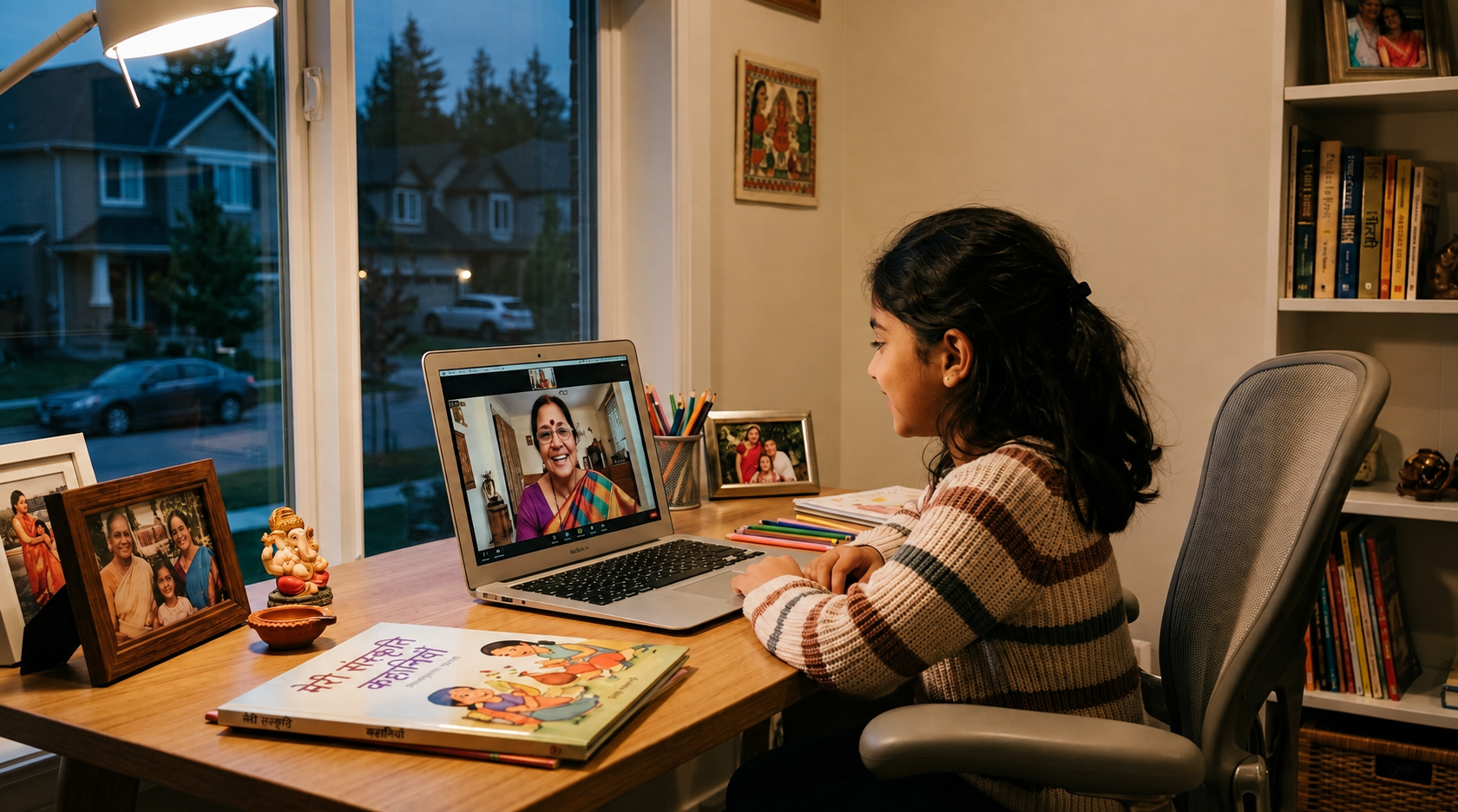
Your child just came home from school speaking perfect English with a British or American accent, and when your grandmother called on video chat, your child didn’t understand a word she said. For many NRI parents, keeping NRI kids connected to Indian culture can feel like an increasingly difficult challenge as children grow up surrounded by a different language, environment, and culture.
If that moment made your stomach drop a little, you’re not alone. It’s one of the quiet worries almost every NRI parent carries: will my child still feel Indian in twenty years?
Here’s the good news: this isn’t a problem you have to solve overnight, and it definitely isn’t one you’re failing at just because you live 8,000 kilometers from home.
Why This Happens (And Why It’s Not Your Fault)
Kids naturally absorb the language and culture around them the fastest. If your child spends 7 hours a day at school speaking English, and only a few hours at home hearing Hindi, Tamil, Bengali, or Gujarati, it’s simple math: the environment wins.
This isn’t about parenting failure. It’s about environmental design. And once you understand that, the whole problem of keeping NRI kids connected to Indian culture becomes a lot less overwhelming.
Think about it this way: you wouldn’t expect a child to learn swimming just by watching videos about water. Language and culture work the same way; they need active, repeated, enjoyable exposure, not occasional guilt-driven lectures about “you should know Hindi.”
Small Daily Habits That Actually Work
You don’t need to uproot your family or move back to India to fix this. Some of the most effective habits are surprisingly small:
- Cook together and narrate in your mother tongue. Kitchen vocabulary is often the first language bridge kids build.
- Watch one Indian cartoon or show a week, in the regional language, with subtitles if needed.
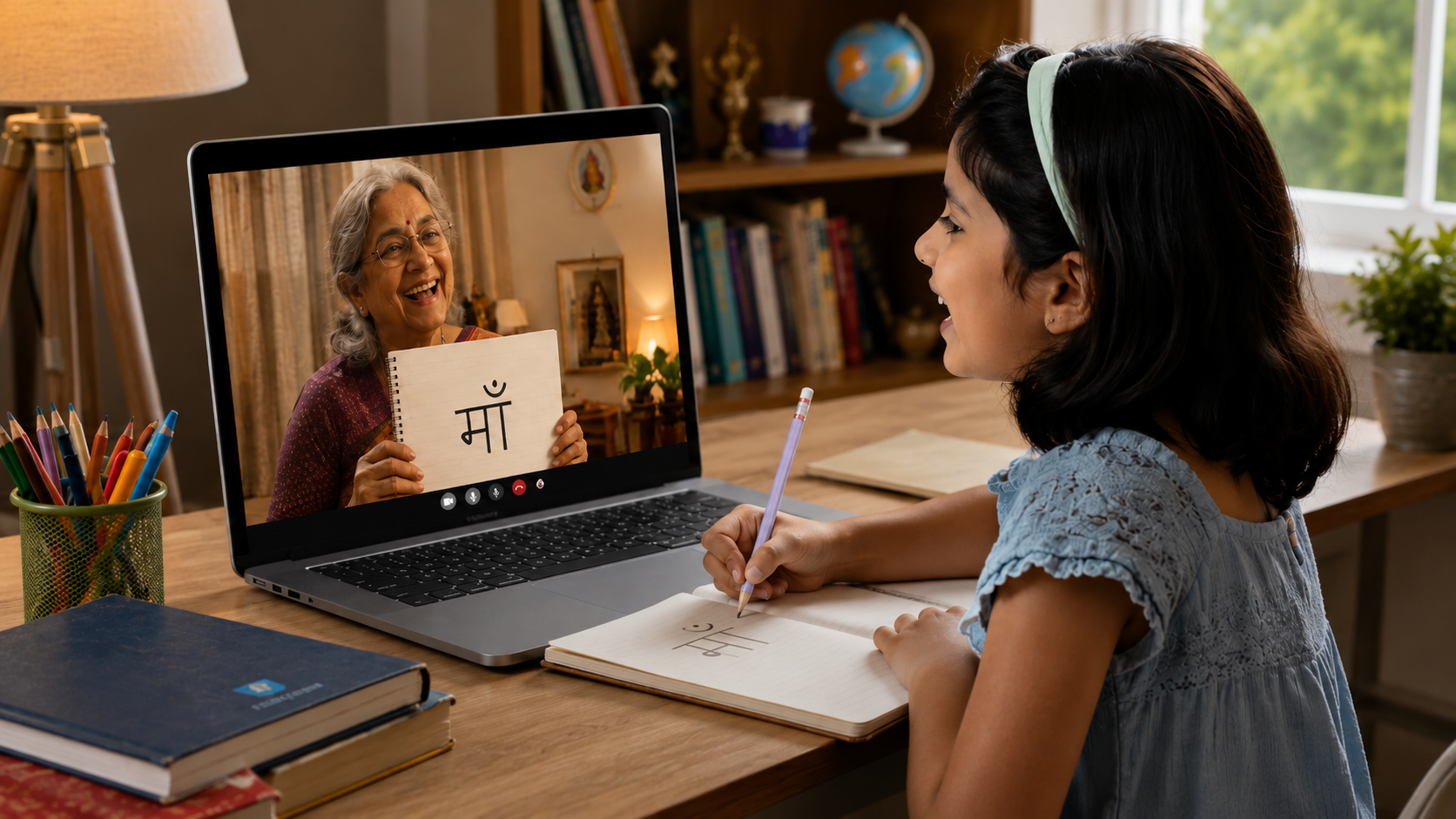
- Video-call grandparents without a translator “on standby.” Let there be a little confusion, that’s exactly what pushes comprehension forward.
- Celebrate festivals fully, not symbolically. Not just a quick photo for Instagram, actual rangoli, actual diyas, actual stories about why Diwali matters.
Small, repeated moments like these build up faster than most parents expect. Culture doesn’t stick because of one big trip to India, it sticks because of a hundred small Tuesdays.
The Festival Trap Most Parents Fall Into
Here’s something that might surprise you: many NRI parents unintentionally reduce “Indian culture” down to just festivals and food. Diwali sweets, Holi colors, a nice kurta for Eid or Onam, and then… nothing for the other 350 days of the year.

Festivals are wonderful, but they’re the dessert, not the meal. Real cultural connection comes from language, stories, values, and everyday conversation; the stuff that happens on a random Wednesday, not just on the calendar-marked days.
This is exactly where a lot of families start looking for a little outside help, something structured enough to be consistent, but fun enough that kids don’t feel like it’s “extra homework.” If you’ve ever wondered what actually goes into a well-designed language class for kids, it’s usually built around exactly this: storytelling, games, and real conversation, not grammar drills.
Make It About Identity, Not Obligation
Here’s a mindset shift that changes everything: stop framing this as “you need to learn Hindi because you’re Indian.” Kids push back against obligation. Instead, frame it as “this is part of who you are, and it’s actually really cool.”

Tell them about their grandparents’ childhood. Explain what their name means. Show them where their favorite snack originally came from. Curiosity pulls kids in far more effectively than duty ever will.
And here’s the part parents often forget: kids pick up on your enthusiasm more than your instructions. If speaking Marathi or Punjabi at home feels like a chore to you, it will feel like a chore to them too. If it feels like a fun secret language only your family shares, they’ll want in on it.
For parents trying to keep NRI kids connected to Indian culture, making language feel like a natural part of family identity rather than an obligation can make a significant difference.
When Structure Helps More Than Willpower
Most parents start strong: a few weeks of “Hindi at home” rules, maybe a language app downloaded with big intentions. And then work happens. Life happens. The rule quietly fades by month two.
This is completely normal, and it’s not a discipline problem, it’s a structure problem.
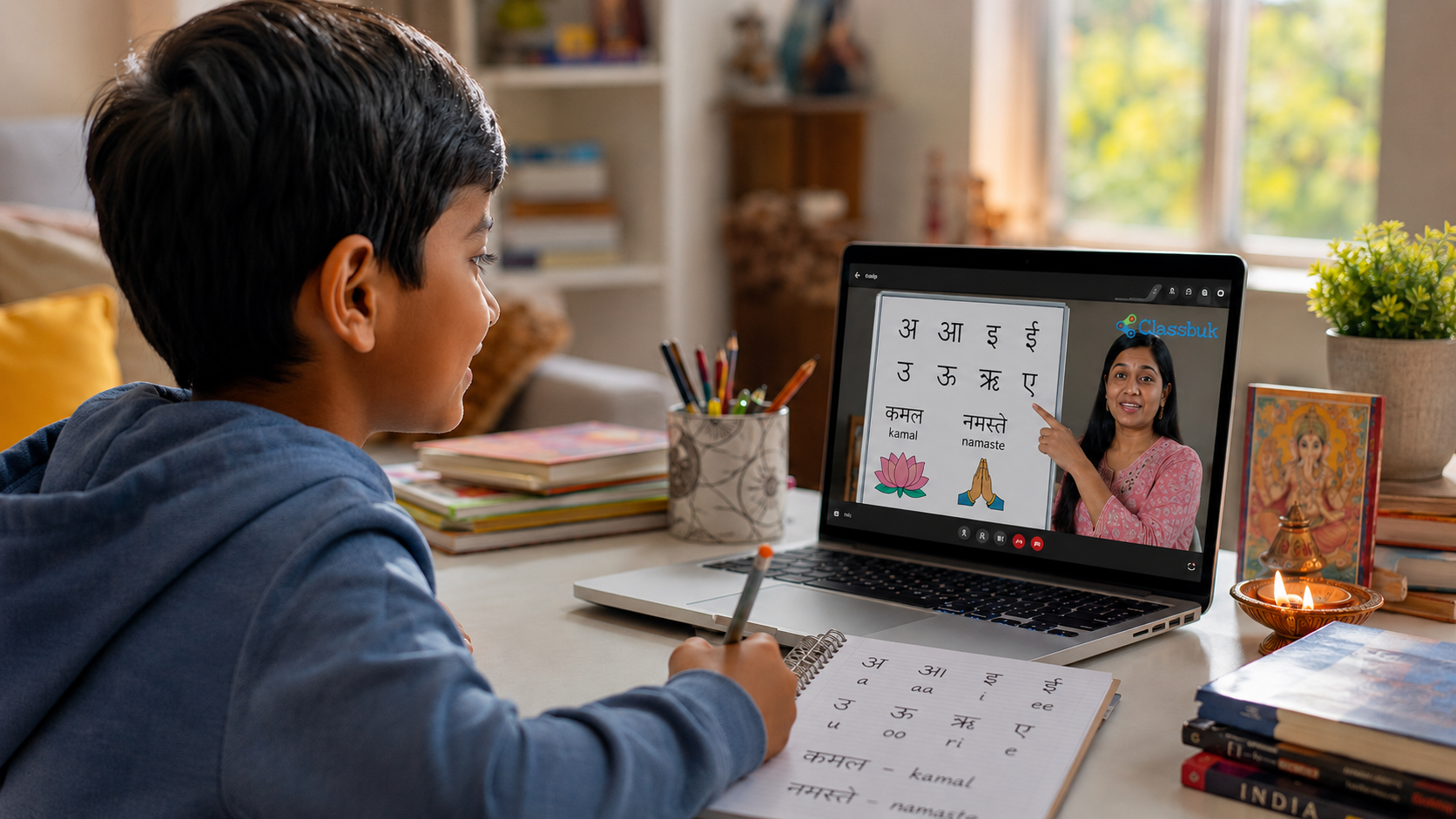
Just like kids rarely stick with a sport unless there’s a coach, a schedule, and other kids around them, language learning tends to stick best when there’s consistency and a bit of external accountability: a regular class time, a real teacher, a small peer group to stay motivated with.
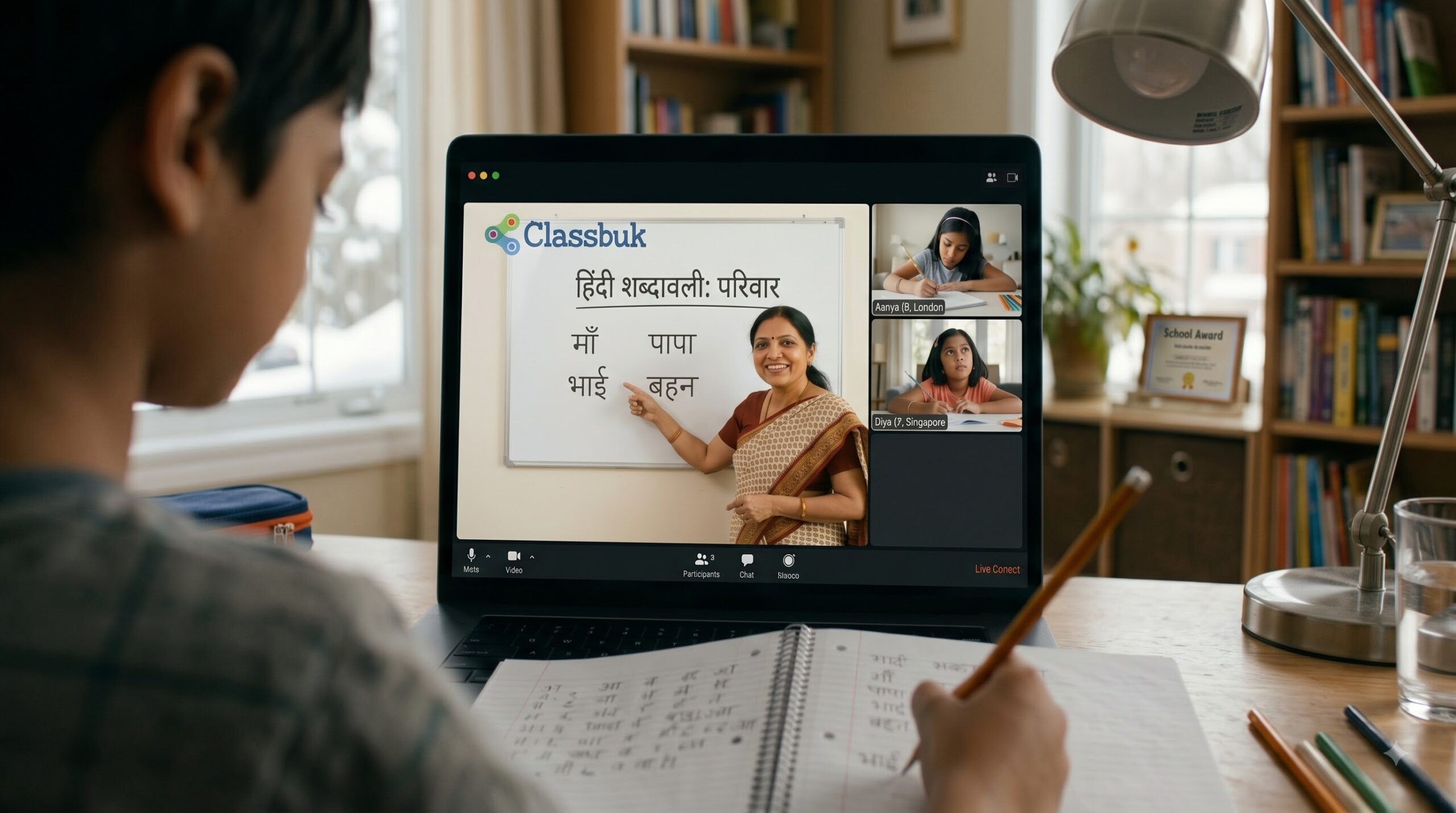
That’s really the whole idea, and it’s not really about mastering perfect grammar. It’s about giving your child enough comfort and confidence that video calls with family don’t feel like a language barrier, and a trip to India doesn’t feel like visiting a foreign country.
A Small Step Goes a Long Way
You don’t need to fix this in one weekend, and you definitely don’t need to feel guilty about the years that have already gone by. Every small, consistent effort, a weekly video call, a festival explained properly, a bedtime story in your mother tongue, adds up more than most parents realize.
And if you’d rather not carry this entirely on your own, that’s completely okay too. Many NRI families find it easier to build this connection with a little consistent, expert support in the mix. If that sounds like something worth trying, you can book a free trial class and see how a fun, structured session feels for your child, no pressure, just a low-key way to see if it clicks.
Because at the end of the day, the goal isn’t perfect fluency. It’s making sure your child never feels like a stranger to their own roots.
0 Comments